

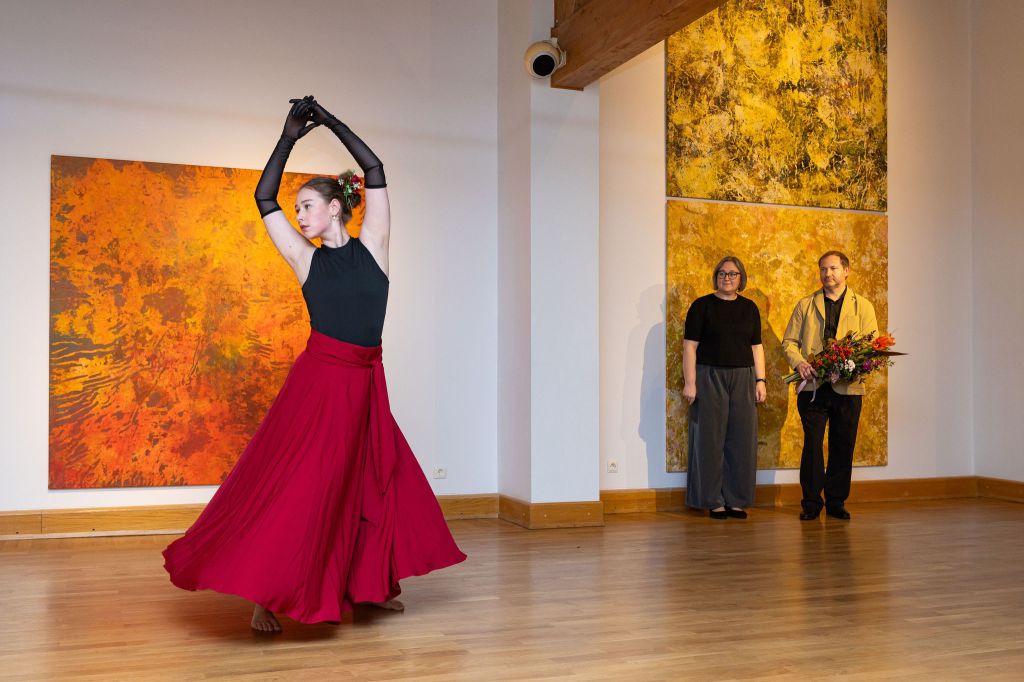
On 12 December 2025, the solo exhibition Satellites by Latvian artist Māris Čačka opened at the Valmiera Museum Exhibition Hall, where it will be on view until 11 February 2026.
The exhibition marks a concentrated and conceptually precise stage in the artist’s practice. Rather than unfolding as a linear narrative, Satellites is constructed as an orbital system in which painterly and graphic works interact like celestial bodies, shaped by attraction, distance, and shifting trajectories. The exhibition proposes not a story but a spatial model of thinking.
The notion of the satellite operates on several levels. It refers to people, experiences, and encounters that have entered the artist’s gravitational field at different moments in life and continue to resonate over time. These presences are not depicted directly. Instead, they are translated into fields of colour, rhythm, and texture that register traces rather than events themselves. Memory here is not narrated but sensed.
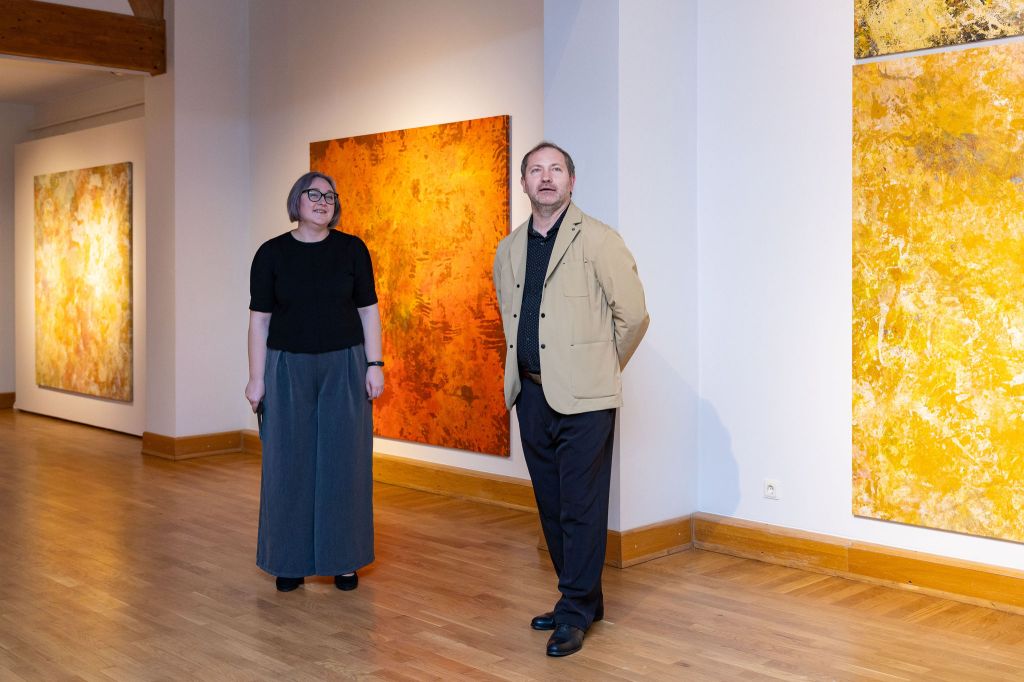
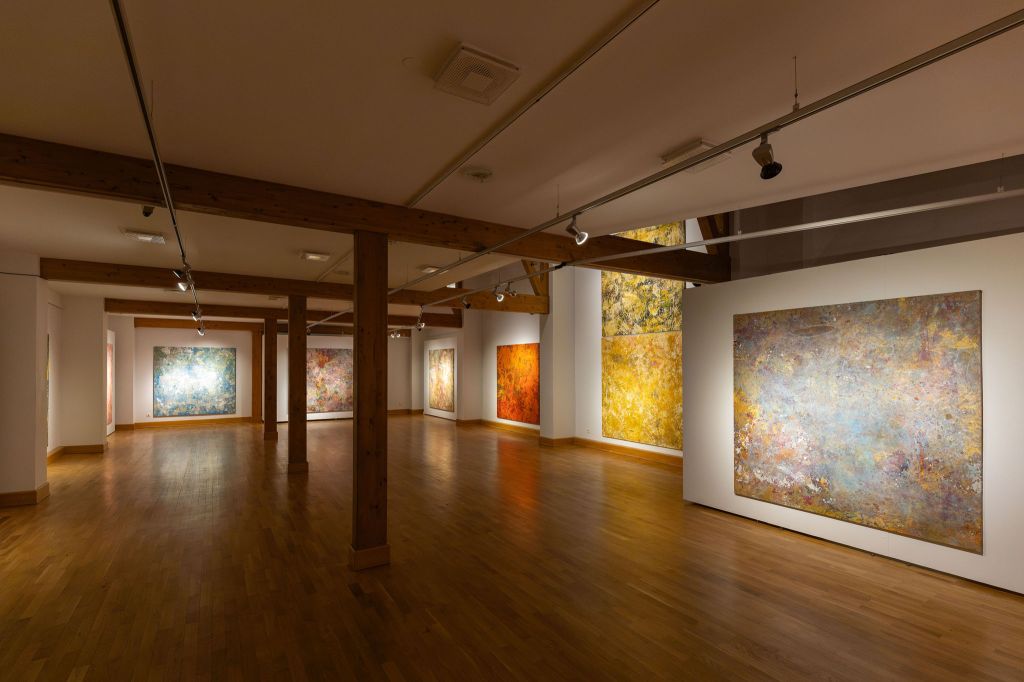
A key structural element of the exhibition is the dialogue between large-scale paintings and small-format works. The monumental canvases establish stable orbits within the exhibition space. Their scale creates a strong physical and emotional presence, forming the gravitational core of the exhibition.
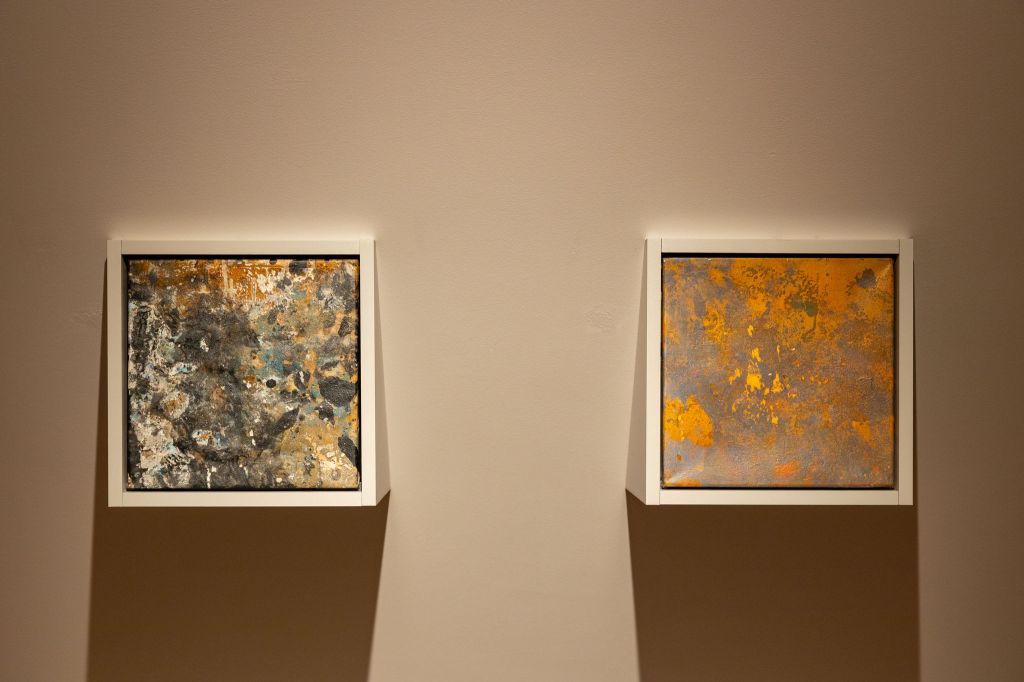
In contrast, the small-format works function differently. They act as meteorites rather than satellites. These works represent people from Valmiera who have been significant in the artist’s life at specific moments. Their presence is concentrated rather than expansive, embodying brief yet decisive encounters that altered trajectories. The reduced format intensifies their meaning, compressing experience into dense visual energy.
Within this system, Valmiera becomes more than the exhibition’s location. It emerges as an active gravitational field where personal memory intersects with shared space. The architectural arrangement of the exhibition reinforces this logic, encouraging the viewer to navigate rather than progress, to circle, return, and recalibrate their position within the visual system.
Through restraint and quiet intensity, Satellites reflects on attachment, release, and relational gravity. It is an exhibition about those who remain visible or invisible companions in our lives, continuing to circulate within memory as subdued yet enduring sources of light.
Photographs by Klavs Vasilevskis








 SIVIA
SIVIA 